
Responding to Climate Change
Suppliers and Other Trade Partners, Local Communities, Global Environment

Basic Approach
The Sumitomo Riko Group is committed to achieving carbon neutrality by 2050 and has established greenhouse gas (GHG) reduction targets. We are taking a Group-wide approach to reducing not only our operational GHG emissions (Scopes 1 and 2) but also emissions throughout our value chain (Scope 3).
To reduce operational emissions, we are pursuing a dual approach of transitioning to renewable energy and improving energy efficiency in production processes. By leveraging our core strengths in manufacturing, materials, and product development, we are actively advancing initiatives to both mitigate and adapt to climate change. In addition, we are planning and implementing initiatives across our value chain to reduce GHG emissions associated with the procurement, transportation, and disposal of raw materials and components.
To reduce operational emissions, we are pursuing a dual approach of transitioning to renewable energy and improving energy efficiency in production processes. By leveraging our core strengths in manufacturing, materials, and product development, we are actively advancing initiatives to both mitigate and adapt to climate change. In addition, we are planning and implementing initiatives across our value chain to reduce GHG emissions associated with the procurement, transportation, and disposal of raw materials and components.
SBTi Validation of Our Targets
In April 2021, the GHG emission reduction targets of the Sumitomo Riko Group, as part of the Sumitomo Electric Group, were validated by the Science Based Targets initiative (SBTi). These targets aim for a 30% reduction in Scope 1 and 2 emissions by FY2030 and a 15% reduction in Scope 3 emissions, both based on FY2018 levels. These goals align with the Paris Agreement’s objective of limiting global temperature rise to well below 2℃ (WB2℃) above pre-industrial levels.
In light of the IPCC Sixth Assessment Report, which highlights the need for more ambitious GHG reduction efforts, the Sumitomo Riko Group revised its medium-term environmental targets for 2030 in 2026 to align with a 1.5℃ pathway. We also plan to update our SBTi-validated targets in line with a 1.5℃ pathway.
In light of the IPCC Sixth Assessment Report, which highlights the need for more ambitious GHG reduction efforts, the Sumitomo Riko Group revised its medium-term environmental targets for 2030 in 2026 to align with a 1.5℃ pathway. We also plan to update our SBTi-validated targets in line with a 1.5℃ pathway.
Disclosure on Climate Change Response
In June 2022, the Sumitomo Riko Group expressed its support for the recommendations of the Task Force on Climate-related Financial Disclosures (TCFD) and is committed to providing appropriate disclosure through its website. We will continue to enhance the quality of our disclosures in alignment with international sustainability disclosure standards, including the International Sustainability Standards Board (ISSB) guidelines.
Related Information
Medium- and Long-Term GHG Reduction Targets
| Target | Target Year | GHG Reduction Target |
|---|---|---|
| Sumitomo Riko Group Long-Term Environmental Vision 2050 | CY2050 | Achieve Carbon Neutrality |
| Sumitomo Riko Group Environmental Target 2030 | FY2030 | 50% reduction in Scope 1 and 2 emissions (vs. FY2018) 30% reduction in Scope 3 emissions (vs. FY2018) |
Efforts to Reduce GHG Emissions in Business Operations
The Sumitomo Riko Group is committed to achieving carbon neutrality by 2050. We are improving energy productivity by eliminating energy waste and promoting equipment switch-off practices when equipment is not in use, while also upgrading energy-inefficient equipment and infrastructure. In addition, we are increasing the use of renewable energy, including solar power and green electricity, to reduce GHG emissions.
GHG Emissions (Sumitomo Riko Group)
The Sumitomo Riko Group has achieved a 33.5% reduction in total GHG emissions for FY2025 compared to FY2018, while carbon intensity has decreased by 52.5% over the same period.
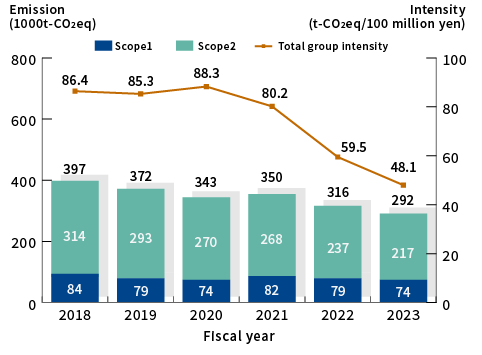
*1 The denominator used for the intensity calculation is net sales within the reporting boundary, excluding intercompany transactions.
*2 Starting from FY2023, we have switched the CO2 emission factors for electricity from a location-based approach to a market-based approach. We are utilizing emission factors specific to electricity providers, and in some cases, we also use country-specific factors from the IEA Emissions Factors.
*3 The CO2 emission factors for sources other than electricity are based on the factors outlined in the Manual for Calculation and Reporting of Greenhouse Gas Emissions published by the Ministry of the Environment.
*4 Starting from FY2023, the emission factors have been revised due to changes in the Act on Promotion of Global Warming Countermeasures.
*5 The emissions data presented in this section has been assured by a third-party organization. However, the emission intensity figures are not included in the scope of this assurance.
*2 Starting from FY2023, we have switched the CO2 emission factors for electricity from a location-based approach to a market-based approach. We are utilizing emission factors specific to electricity providers, and in some cases, we also use country-specific factors from the IEA Emissions Factors.
*3 The CO2 emission factors for sources other than electricity are based on the factors outlined in the Manual for Calculation and Reporting of Greenhouse Gas Emissions published by the Ministry of the Environment.
*4 Starting from FY2023, the emission factors have been revised due to changes in the Act on Promotion of Global Warming Countermeasures.
*5 The emissions data presented in this section has been assured by a third-party organization. However, the emission intensity figures are not included in the scope of this assurance.
Energy Consumption (Sumitomo Riko Group)
In FY2025, the Sumitomo Riko Group's energy consumption remained largely unchanged from the previous fiscal year.
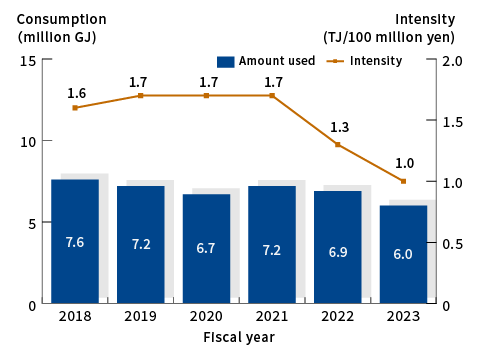
*1 The emission intensity figures are not included in the scope of the third-party assurance.
*2 The denominator used for the intensity calculation is net sales within the reporting boundary, excluding intercompany transactions.
*3 The energy conversion factors used are based on the Act on the Rational Use of Energy (Energy Conservation Act) by the Ministry of Economy, Trade and Industry of Japan.
*4 In FY2023, the energy conversion factors were revised due to amendments to the Energy Conservation Act.
*2 The denominator used for the intensity calculation is net sales within the reporting boundary, excluding intercompany transactions.
*3 The energy conversion factors used are based on the Act on the Rational Use of Energy (Energy Conservation Act) by the Ministry of Economy, Trade and Industry of Japan.
*4 In FY2023, the energy conversion factors were revised due to amendments to the Energy Conservation Act.
Renewable Energy Consumption (Sumitomo Riko Group)
The Sumitomo Riko Group's renewable energy consumption for FY2025 has increased by 31.8% compared to the previous year, and the renewable energy share has risen by 5.5 percentage points.
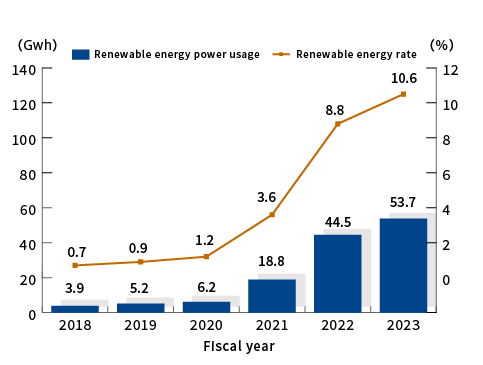
* Renewable energy share = Renewable electricity consumption / Total electricity consumption
To achieve carbon neutrality, the Sumitomo Riko Group is actively expanding the share of renewable energy it uses while diversifying procurement methods. In FY2025, in addition to expanding on-site solar power generation capacity, we implemented new initiatives, including the procurement of non-fossil certificates and locally generated renewable electricity in Japan, I-RECs in Thailand and Mexico, and biomass-based renewable electricity in Indonesia.
Related Information
Related Information
Examples of GHG Emissions Reduction Initiatives
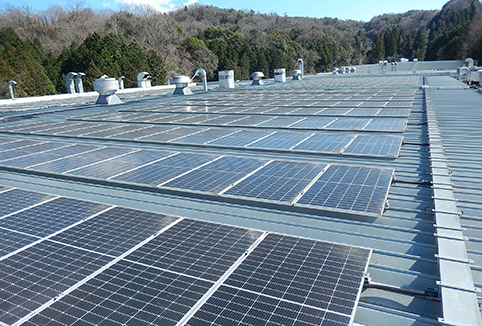
①Expansion of Solar Power Generation
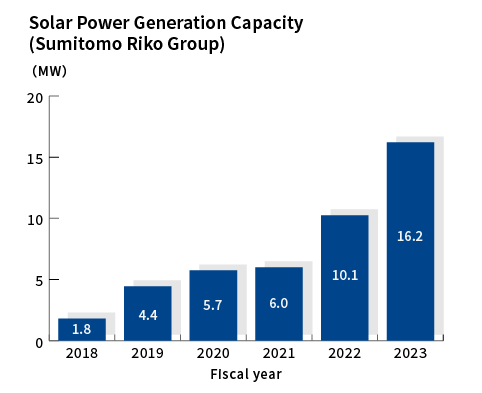
Solar power is one of the most widely used forms of renewable energy and generates electricity without emitting GHGs. For this reason, the Sumitomo Riko Group is actively expanding its use of solar energy.
In FY2025, we installed 3.6 MW of solar power generation capacity at sites in Japan, China, Romania, and Spain. As a result, our cumulative installed capacity reached 24.7 MW, an increase of 17% from the previous year, contributing to an annual reduction of approximately 12,000 tCO2e.
In FY2025, we installed 3.6 MW of solar power generation capacity at sites in Japan, China, Romania, and Spain. As a result, our cumulative installed capacity reached 24.7 MW, an increase of 17% from the previous year, contributing to an annual reduction of approximately 12,000 tCO2e.
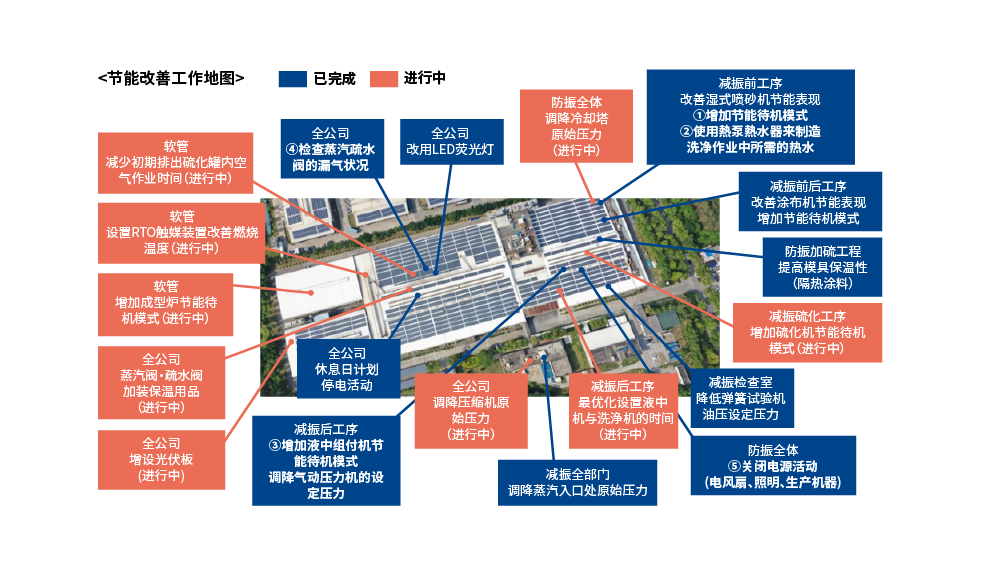
②Global Energy Conservation Initiatives: Launch at SRK-QRO
The Sumitomo Riko Group conducts global energy conservation activities to strengthen collaboration between headquarters and manufacturing sites and ensure the achievement of its GHG reduction targets.
One example of these efforts is SRK-QRO in Mexico, where full-scale energy conservation activities were launched in FY2025. The site implemented a total of 10 measures, primarily based on initiatives that have proven successful at headquarters. These included consolidating the use of curing equipment, switching off equipment when not in use, introducing standby modes, visualizing and repairing compressed-air leaks, and optimizing the operation of pumps and compressors.
As a result, annual electricity consumption was reduced by approximately 200 MWh, and energy intensity improved by 12% compared to the previous year.
One example of these efforts is SRK-QRO in Mexico, where full-scale energy conservation activities were launched in FY2025. The site implemented a total of 10 measures, primarily based on initiatives that have proven successful at headquarters. These included consolidating the use of curing equipment, switching off equipment when not in use, introducing standby modes, visualizing and repairing compressed-air leaks, and optimizing the operation of pumps and compressors.
As a result, annual electricity consumption was reduced by approximately 200 MWh, and energy intensity improved by 12% compared to the previous year.
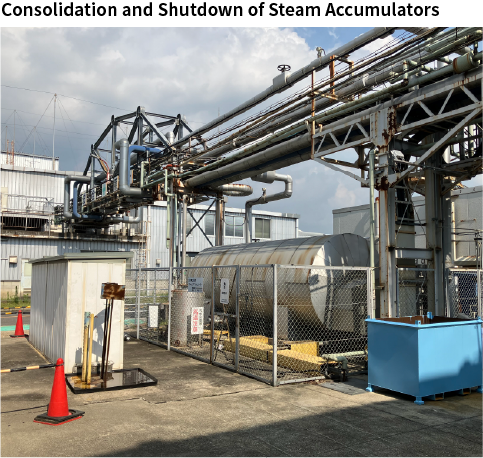
③Steam Consumption Reduction Initiatives in Hose Manufacturing
Reducing energy consumption in hose manufacturing processes is a key priority for the Sumitomo Riko Group. To achieve this, we strengthened energy-saving initiatives focused on reducing steam consumption.
Measures included repairs to steam-pipe insulation and steam traps to reduce steam leakage and heat loss caused by deterioration over time. We also consolidated the use of curing equipment across multiple sites, improving production efficiency and optimizing steam consumption. In addition, accumulators that no longer matched actual operating conditions were eliminated, and the control and operation of boiler units were reviewed, helping to reduce steam losses during standby periods.
Through these initiatives, we improved energy efficiency while reducing GHG emissions, thereby lowering environmental impact and supporting more sustainable manufacturing operations.
Measures included repairs to steam-pipe insulation and steam traps to reduce steam leakage and heat loss caused by deterioration over time. We also consolidated the use of curing equipment across multiple sites, improving production efficiency and optimizing steam consumption. In addition, accumulators that no longer matched actual operating conditions were eliminated, and the control and operation of boiler units were reviewed, helping to reduce steam losses during standby periods.
Through these initiatives, we improved energy efficiency while reducing GHG emissions, thereby lowering environmental impact and supporting more sustainable manufacturing operations.
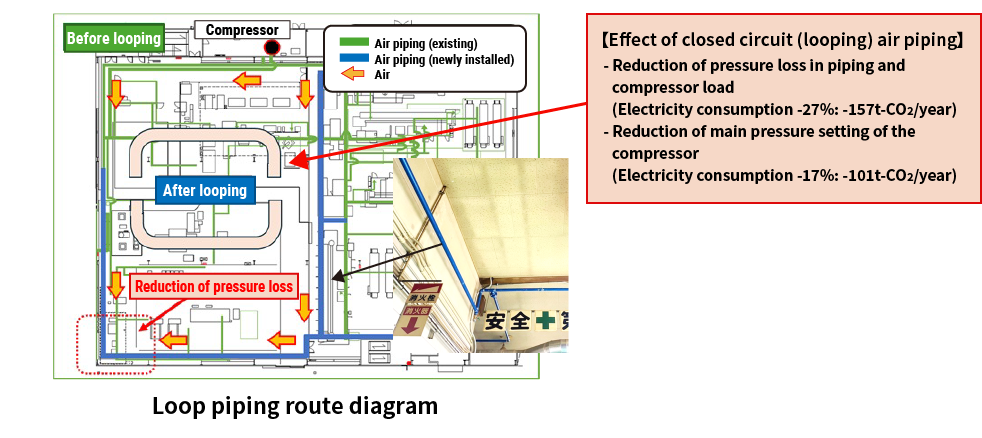
④Energy Efficiency Improvements for Utility Equipment and Infrastructure
We are pursuing both reduced energy consumption and stable operations through the review and optimization of utility equipment and infrastructure that are essential to our business activities.
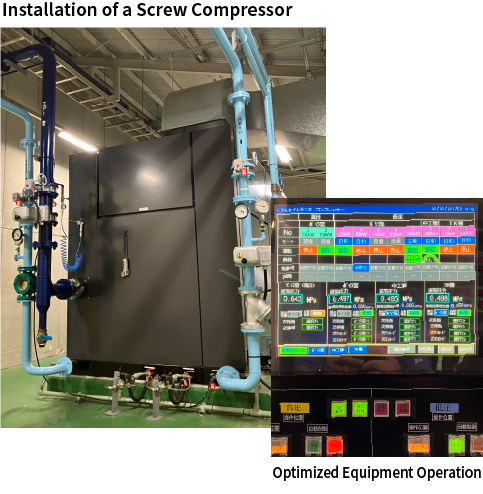
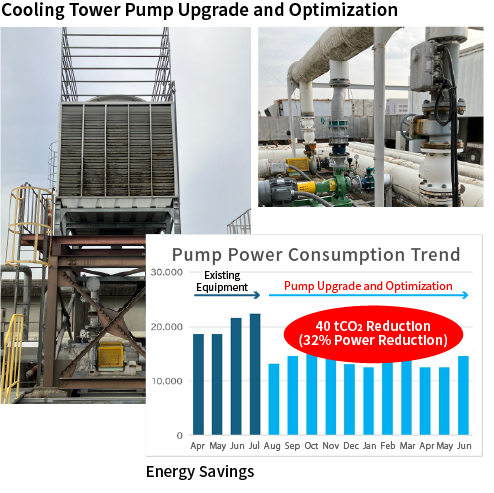
For compressed-air systems, we decommissioned energy-inefficient turbo compressors and replaced them with high-efficiency screw compressors, significantly improving energy efficiency. For cooling towers, we eliminated unnecessary operation, promoted shutdowns during non-essential periods, and implemented inverter controls to optimize operating conditions. In addition, we replaced circulating pumps with high-efficiency pumps, further contributing to energy savings.
We will continue to promote infrastructure improvements that help reduce environmental impact and support more sustainable operations.
For compressed-air systems, we decommissioned energy-inefficient turbo compressors and replaced them with high-efficiency screw compressors, significantly improving energy efficiency. For cooling towers, we eliminated unnecessary operation, promoted shutdowns during non-essential periods, and implemented inverter controls to optimize operating conditions. In addition, we replaced circulating pumps with high-efficiency pumps, further contributing to energy savings.
We will continue to promote infrastructure improvements that help reduce environmental impact and support more sustainable operations.
GHG Emissions in the Value Chain
The Sumitomo Riko Group is committed to achieving carbon neutrality by 2050. To this end, we are not only reducing GHG emissions from our own operations (Scope 1 and 2) but also working to minimize emissions across our entire value chain (Scope 3), which includes the procurement of raw materials as well as the use and disposal of our products.
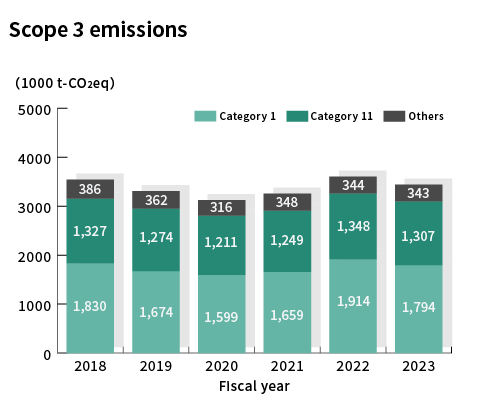
In FY2025, Scope 1 and 2 emissions accounted for 7.8% of the Sumitomo Riko Group's total GHG emissions, while Scope 3 emissions accounted for 92.2%. Notably, Scope 3 emissions decreased by 12% compared to FY2018, primarily due to the adoption of sustainable materials and increased demand for products for electric vehicles.
In FY2025, Scope 1 and 2 emissions accounted for 7.8% of the Sumitomo Riko Group's total GHG emissions, while Scope 3 emissions accounted for 92.2%. Notably, Scope 3 emissions decreased by 12% compared to FY2018, primarily due to the adoption of sustainable materials and increased demand for products for electric vehicles.
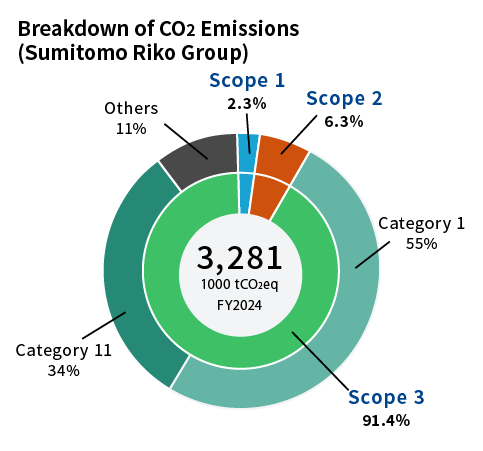
•Scope 1: 79,000 tCO2e
•Scope 2: 185,000 tCO2e
•Scope 3: 3,116,000 tCO2e
Category 1 = Purchased goods and services
Category 11 = Use of sold products
Others = Categories 2-10, 12-15
•Scope 2: 185,000 tCO2e
•Scope 3: 3,116,000 tCO2e
Category 1 = Purchased goods and services
Category 11 = Use of sold products
Others = Categories 2-10, 12-15
Promotion of Modal Shift and Transportation Efficiency
At Sumitomo Riko, we are committed to reducing the environmental impact of logistics through modal shifts and shipment consolidation, which aim to decrease the number of trips by utilizing larger vehicles. Additionally, we minimize the number of trips through route optimization, further reducing our environmental footprint.
Future Issues and Responses
The AR6 Synthesis Report, the latest United Nations report on climate change published in March 2023, calls on countries around the world to significantly accelerate efforts to reduce GHG emissions.
In response, the Sumitomo Riko Group believes it is necessary not only to steadily advance its current GHG reduction plan, but also to accelerate the achievement of existing targets and establish new ones. Furthermore, in pursuing carbon neutrality, we will promote collaboration with the Sumitomo Electric Group, local businesses, and companies across a wide range of industries to help address this global challenge.
In response, the Sumitomo Riko Group believes it is necessary not only to steadily advance its current GHG reduction plan, but also to accelerate the achievement of existing targets and establish new ones. Furthermore, in pursuing carbon neutrality, we will promote collaboration with the Sumitomo Electric Group, local businesses, and companies across a wide range of industries to help address this global challenge.
