
SumiRiko Technical Center America, Inc.
(On assignment from Sumitomo Riko)
Hirotaka Matsui
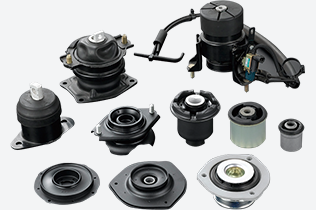
In one vehicle there may be 60 or 70 parts using anti-vibration rubber, including engine mounts and suspension parts on the chassis. Anti-vibration rubber has continued to evolve along with automobiles. A prime example is the Electrical Active Control Mount (E-ACM). The shaking of the engine is examined as waveforms by computer, and then by transmitting the reverse phase electro-magnetically, the vibrations can be canceled. There will be demand in the future for products that can stand up to any kind of environmental conditions. Saving fuel by reducing weight is just one of the contributions we can make. We will tirelessly continue our research and development to bring you both a safe and smooth ride and contribute to the environment.
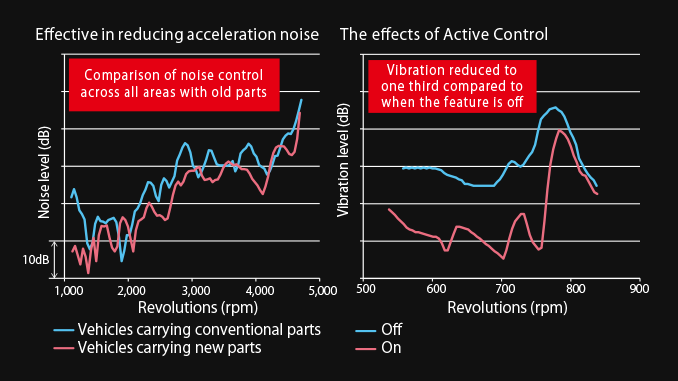
This is a graph showing a comparison between the noise during acceleration of a vehicle using the new parts and old parts (on the left), and a graph comparing the vibration control effect when Active Control is on and when it is off (on the right).
Manager,
EV Cooling Technology Section No.2,
Advanced Engineering Development Department,
Engineering Division,
Automotive Hose Business
Headquarters
Yusuke Akimoto
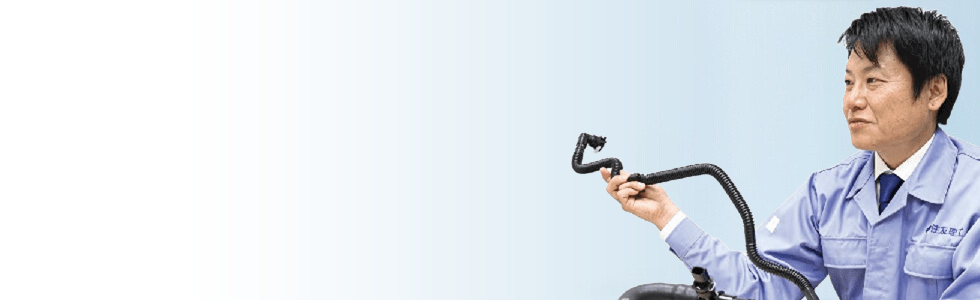
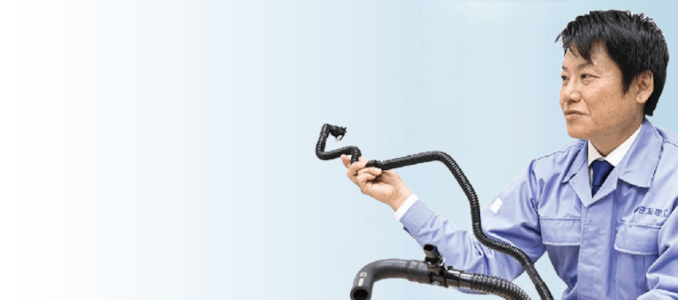
As vehicle electrification advances, thermal management for batteries and motors is becoming increasingly critical. At the same time, the expansion of cooling circuits has led to longer piping, creating new issues to tackle such as increased vehicle weight and higher costs. To address such challenges, we developed a "Resin Tube for Cooling Piping of BEV" by optimizing its materials, structure, and manufacturing process. Focusing on the operating environment of BEVs, we carefully selected materials and designed the tube structure to meet the required performance, thereby achieving reductions in both cost and weight compared with conventional products. Moreover, by creating a manufacturing process tailored for automation, we have ensured high quality and productivity. By responding to the increasingly diverse and sophisticated thermal management needs of electric vehicles, we provide practical solutions that contribute to the advancement of vehicle electrification.
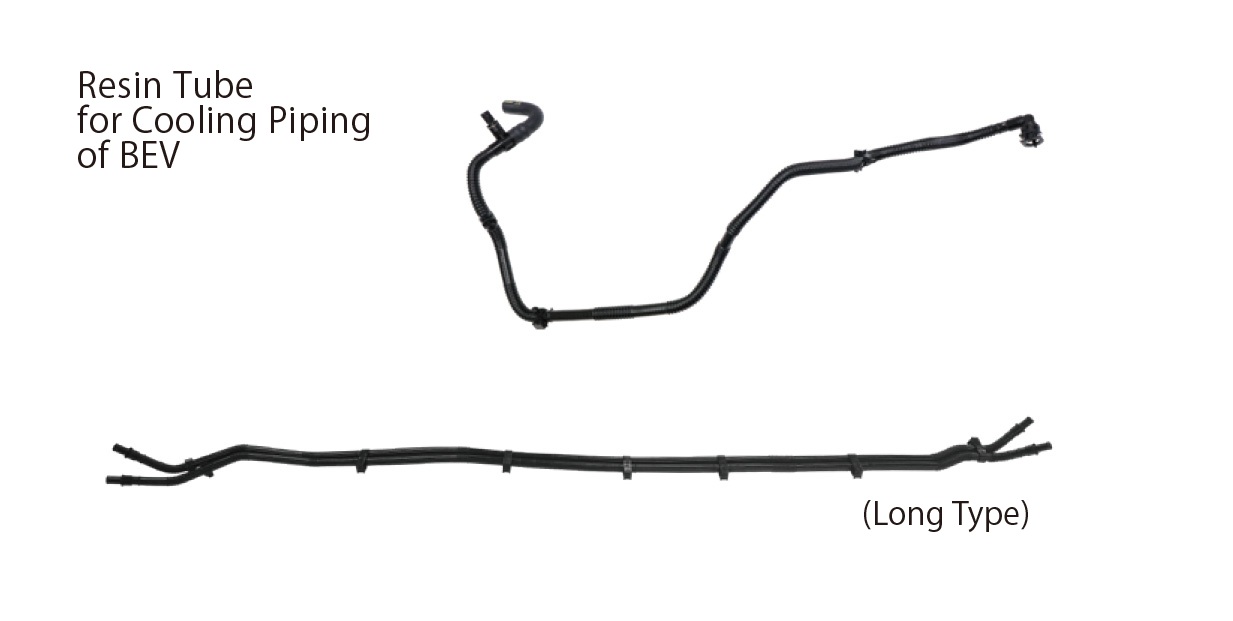
Designed to meet the demands of Battery Electric Vehicles (BEVs), this lightweight, low-cost resin piping features a three-layer structure with low-cost polypropylene (PP)*1 as the inner layer and high-strength polyamide (PA)*2 as the outer layer. This configuration achieves both excellent stiffness and durability while reducing cost and weight. Moreover, the bellows design provides greater flexibility when routing the piping through confined installation spaces.
To address the productivity losses and cost increases associated with increased pipe length, we adopted a laser-welded joint structure at each end. This ensures high-quality connections and facilitates automated manufacturing.
Furthermore, the automated production line that integrates all processes—from molding to inspection—has improved production efficiency as well as ensured consistent product quality, which has significantly contributed to both cost reduction and weight savings.
*1 Polypropylene
*2 Polyamide

Engineering Section No. 2,
Vibration Control Engineering Department,
Engineering Division,
Industrial Products and Materials Business Unit,
Industrial Products Business Headquarters
Yosuke Kawabata
In Japan, where earthquakes are common, the possibility of a massive earthquake occurring sometime in the future is quite high, so measures to protect against earthquakes are absolutely necessary. There are three types of measures that can be taken; earthquake resistance, seismic isolation, and seismic control. Earthquake resistance means making the entire building stronger so that it can resist the shocks from earthquakes. Seismic isolation means separating the building from the ground using seismic isolation devices to make it harder for the shaking of the earthquake to reach the building. And finally, seismic control is the system of installing dampers in walls to absorb vibrations to reduce the shaking of the building. It is this method that Sumitomo Riko is putting the most energy into. Seismic isolation involves high costs, and there are cases where it is not suitable due to the ground. Seismic control works irrespective of the ground and buildings can be provided for much less money, and right now it is gaining a lot of attention.
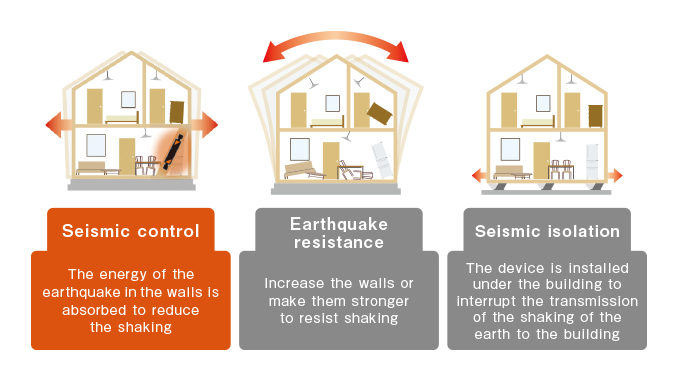
Making the most of its core competencies, polymer materials technology and comprehensive evaluation technology, Sumitomo Riko has gained a strong reputation for providing world-class anti-vibration technology to the automotive field. Furthermore, we have seen massive growth over the last few years by applying the technology and know-how we have developed to earthquake measures. Our dampers not only absorb repetitive shaking, they are also low cost.
They have been developed using the best anti-vibration technology in the world and have great potential to provide solutions in the housing sector. We anticipate Sumitomo Riko's seismic control devices will be broadly used across the market.


Engineering Section No.3
Vibration Control Engineering Department
Engineering Division
Industrial Products and Materials Business Unit
Industrial Products Business Headquarters
Kento Tamaki
The anti-vibration rubber is used in the truck parts which support the carriages of railway rolling stock, including Shinkansen. In the passenger carrying parts of the carriage above there are regulations about using fire retardants and inflammable materials, but these standards are relaxed for the trucks. Sumitomo Riko, however, prepares for any situation, developing materials with flame retardant properties so that we clear even those standards. Rubber is a material whose physical properties are easily changed by temperature. Overseas there are places with extremes of cold and heat not found in Japan, so we have established our own design parameters that anticipate use in a range of environments, and we develop products that also clear these conditions. The people riding in the carriages do not see the anti-vibration rubber. But I believe that it is one of Sumitomo Riko's principles to pursue the safety and comfort of users, even when they are unaware of our efforts.
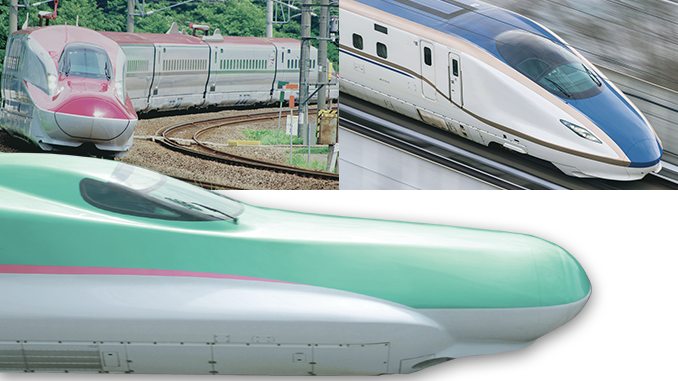
The anti-vibration technology used in railway rolling stock is indispensable for safety and comfort, but another important property is environmental credentials. There are stringent checks into the materials to confirm that there are no substances of concern that can damage the environment, with the entire life cycle of the product examined from development through to what happens after they are replaced and disposed of. Furthermore, durability is a property that is most sought after by railway operators. That is, they need us to lengthen the life cycle of our products. We have had requests to almost double conventional durability, and this voice is growing. By increasing the life cycle of the part, you decrease the costs of maintenance. Furthermore, in order to respond to the demand for decreased weight, we are taking steps to use resins and other materials other than metals, with the aim to use these also in rolling stock.

Global
Headquarters
JP Tower Nagoya 1-1-1, Meieki, Nakamura-ku, Nagoya-shi,
Aichi 450-6316, Japan
View on Google maps
Komaki Head
Office
1, Higashi 3-chome, Komaki-shi, Aichi 485-8550, Japan
View on Google maps